

Many companies use outside providers for technology needs in today’s fast-paced business environment. What is outsourcing in information technology? IT outsourcing means hiring outside experts for specific technology functions or entire operations. Businesses can focus on core strengths while using specialized skills.
Understanding outsourced technology services helps business leaders make informed choices. These services include software development and IT support, giving companies skills they may lack in-house. Outsourcing may provide lower operating costs and help companies use resources more efficiently.
Growth makes better scalability important for businesses. Outsourcing helps companies adjust to changing demands, so technology can grow with the business. Organizations can also strengthen cybersecurity through providers that specialize in this field.
Outsourcing includes onshore, nearshore, and offshore options. Companies choose providers based on their goals, budget, and regulatory requirements. This article examines business technology outsourcing models, common services, benefits, challenges, and vendor selection.
Key Takeaways
- IT outsourcing allows businesses to hire external experts for technology functions.
- Access to specialized skills can lead to improved efficiency and innovation.
- Outsourcing can significantly reduce operational costs.
- Companies can achieve better scalability by utilizing outsourced services.
- Cybersecurity capabilities can be strengthened through specialized partnerships.
- Organizations have the flexibility to choose from various outsourcing models.
What Is Outsourcing in Information Technology
The information technology outsourcing definition explains how companies assign outsourced IT functions to outside experts. This strategic choice lets organizations focus on core work while using specialized skills from an IT outsourcing provider. The work may cover one task or full technology management.
Defining IT Outsourcing and Its Scope
IT outsourcing means transferring selected IT functions to a third-party technology partner. Services may include managed IT services, cloud computing, and cybersecurity. An organization might outsource help desk support or a broader environment covering infrastructure, applications, and security controls.
Core Components of Outsourced IT Services
Successful outsourcing requires several core service elements:
- Service Delivery: The method by which IT services are provided to the client.
- Governance: The framework for managing the relationship between the client and the provider.
- Performance Measurement: Metrics used to evaluate the effectiveness of the outsourced services.
- Technical Support: Assistance provided to resolve technical issues.
- Data Handling: The management and protection of sensitive information.
- Documentation: Detailed records of processes and procedures.
- Escalation Procedures: Steps taken when issues cannot be resolved at the initial support level.
Common IT Functions Delegated to External Providers
Organizations often outsource these IT functions:
| Outsourced IT Function | Description | Benefits |
|---|---|---|
| Software Development | Creating custom software solutions. | Access to specialized skills and faster development cycles. |
| Infrastructure Administration | Managing IT infrastructure, including servers and networks. | Improved reliability and performance. |
| Cybersecurity Monitoring | Protecting systems from cyber threats. | Enhanced security posture and risk management. |
Key Stakeholders in the IT Outsourcing Ecosystem
Successful IT outsourcing involves several key stakeholders:
Related Posts:
- Front-End Technology Explained: The Tools Behind…

- Science vs. Technology: What’s the Difference and…

- How Many Fields Are There in Information Technology…

- What is Network Switching Technology The Backbone of…

- What is Intel Smart Connect Technology Keeping Data Updated

- How Technology is Used in Schools Enhancing Learning

- The Client Organization: The business outsourcing its IT functions.
- The IT Outsourcing Provider: The third-party company delivering the services.
- Internal Technology Leaders: Individuals within the client organization overseeing IT strategy.
- End Users: Employees who utilize the outsourced services.
- Compliance Teams: Ensuring adherence to regulations and standards.
- Executive Sponsors: Leaders who support the outsourcing initiative.
Successful IT outsourcing depends on clear duties, measurable results, secure access, and effective communication among all parties.
The Evolution of IT Outsourcing in the United States
The history of IT outsourcing shows how businesses changed their view of technology partners. At first, companies mainly outsourced work to cut costs, but this approach changed greatly over time.
Today, businesses seek strategic IT partnerships that offer more than labor savings. They use technology to improve customer experience, strengthen analytics, and support digital commerce. Companies now expect partners to contribute beyond routine operations.
From Cost-Cutting to Strategic Partnership
Early outsourcing focused on cutting costs and combining infrastructure. Companies gave basic tasks to third-party providers to lower labor expenses. As technology advanced, expectations for technology service providers also changed.
Businesses saw that outsourcing could support innovation and create a competitive edge. Modern partnerships stress teamwork, with providers offering architecture advice, automation, and cybersecurity skills. This change shows why digital transformation outsourcing matters in today’s market.
Modern Trends Reshaping the IT Outsourcing Landscape
Several key trends now shape IT outsourcing, including cloud outsourcing trends:
- Cloud computing, which enables flexible and scalable IT solutions.
- Artificial intelligence and automation, enhancing efficiency and reducing manual tasks.
- Remote and hybrid work models, which have become more prevalent.
- Managed security services, focusing on protecting sensitive data.
- Outcome-based contracts, where providers are evaluated based on measurable results.
Businesses now judge providers by engineering quality, security maturity, and innovation capacity, not hourly rates alone. This broader review shows how outsourcing has become a strategic IT partnership model.
| Trend | Description | Impact on Outsourcing |
|---|---|---|
| Cloud Computing | Flexible and scalable IT solutions | Increased reliance on cloud service providers |
| AI & Automation | Enhances efficiency and reduces manual tasks | Shifts focus towards innovation |
| Remote Work | More prevalent work-from-home models | Changes collaboration dynamics |
| Managed Security | Focus on data protection | Increased demand for cybersecurity services |
| Outcome-Based Contracts | Evaluation based on measurable results | Aligns provider goals with business objectives |
Key Reasons Why Businesses Outsource Technology Services
Exploring why companies outsource IT reveals financial and strategic factors. More organizations now recognize the benefits of outsourcing technology services. Several key reasons drive this trend:
Cost Reduction and Operational Efficiency
A primary reason for outsourcing is cost reduction, which supports IT cost reduction and operational efficiency. External providers can help companies:
- Achieve predictable service expenses, which helps in budgeting.
- Reduce investments in internal infrastructure, allowing for more capital to be allocated elsewhere.
- Access shared resources from providers, minimizing overhead costs.
- Lower recruitment and training demands, which can be both time-consuming and expensive.
However, companies must weigh savings against transition expenses, contract fees, governance requirements, and switching costs. A full analysis shows whether the benefits outweigh the drawbacks.
Access to Specialized Technical Expertise
Another major reason for technical expertise outsourcing is access to specialized skills. External providers can supply:
- Engineers and architects with advanced knowledge.
- Security professionals to safeguard sensitive data.
- Cloud specialists who can optimize infrastructure.
- Data experts to enhance analytics capabilities.
- Compliance personnel to navigate regulatory landscapes.
Small and mid-sized businesses may struggle to hire these professionals internally. Outsourcing provides top-tier talent without a long-term commitment, helping companies stay competitive.
Focus on Core Business Functions
Outsourcing also helps organizations maintain a strong core business focus. By delegating routine or specialized IT tasks, leaders and employees can concentrate on:
- Developing products that meet customer needs.
- Enhancing customer service and engagement.
- Driving revenue generation and market expansion.
This focus supports growth and sustainability in a competitive landscape.
Scalability and Flexibility Advantages
Lastly, scalable IT services help businesses adapt to changing demands. Outsourced teams can:
- Expand during product launches to meet increased workloads.
- Support seasonal demand fluctuations effectively.
- Provide coverage for new locations and systems without extensive internal restructuring.
This flexibility helps businesses respond quickly to market changes and seize new opportunities.
Common Types of IT Outsourcing Models
Understanding IT outsourcing models helps businesses improve daily operations. Each model has different benefits and limits that may fit specific business needs. The main choices are onshore, nearshore, and offshore outsourcing.
Onshore Outsourcing
Onshore IT outsourcing uses providers in the client’s country. Shared time zones and cultural similarities make communication and coordination easier. It can also simplify legal compliance and regulatory duties.
The main trade-off is higher labor costs than other outsourcing options. Companies should balance easier teamwork against potentially higher expenses.
Nearshore Outsourcing
Nearshore IT outsourcing means working with providers in nearby countries or regions. This model balances lower costs with operational convenience. Similar time zones support real-time communication and project management.
Cultural similarities can improve teamwork and understanding. This model suits businesses needing quick results and close partner relationships.
Offshore Outsourcing
Offshore IT outsourcing uses providers in distant countries. It offers access to more talent and may lower costs. Different time zones can support around-the-clock productivity.
Challenges include communication barriers, cultural differences, and quality concerns. Strong processes and oversight can protect quality and security.
Selecting the Right Model for Your Organization
Choosing an outsourcing model requires careful review of several factors. Organizations should evaluate:
- Data residency and regulatory obligations
- Language proficiency and cultural fit
- Time-zone coverage and technical talent availability
- Geopolitical exposure and travel requirements
- Service criticality and total cost of ownership
A blended global IT delivery model may work best in some cases. It combines local leadership, regional support, and global delivery capabilities. This approach can maximize each model’s benefits.
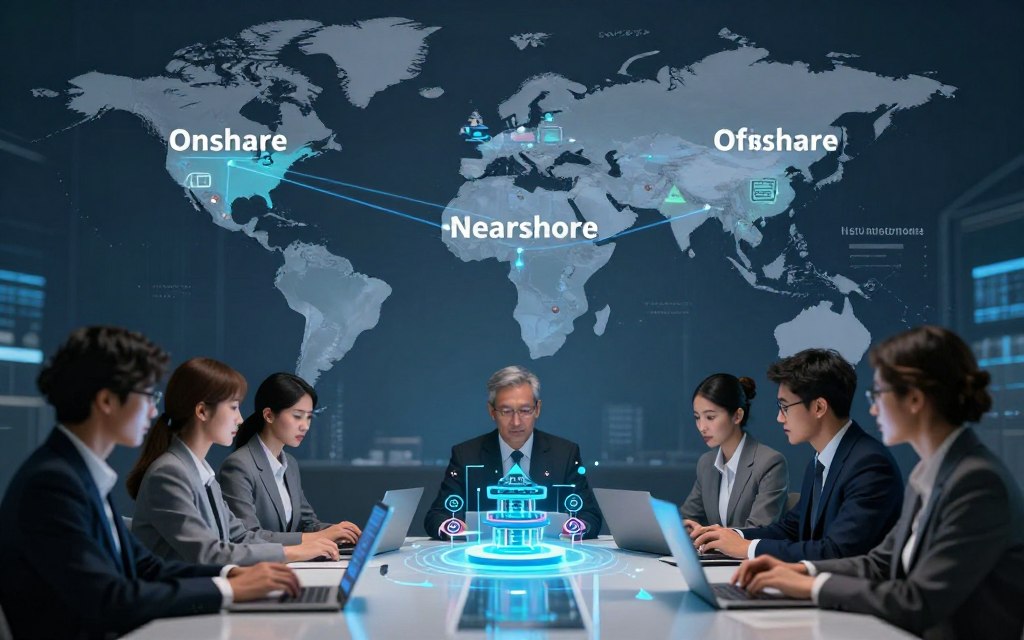
By reviewing these factors, businesses can align their outsourcing location strategy with their operational needs. They can then choose the model that best supports their goals.
For more insights on IT outsourcing models, visit this link.
Popular IT Services That Companies Outsource
Many businesses outsource IT services to work more efficiently and focus on core operations. These services cover several technology needs and help organizations choose the right outsourcing plan.
Software Development and Application Maintenance
One popular service is outsourced software development. It creates custom web and mobile applications for unique business needs. Companies often seek help with:
- Product engineering
- Legacy modernization
- Quality assurance and testing
- Bug fixes and performance improvements
- Release management
These application maintenance services keep software functional and relevant as technology changes.
Cloud Computing and Infrastructure Management
Another key area is cloud infrastructure management. Providers help businesses with:
- Cloud migration and architecture
- Monitoring and identity management
- Storage solutions and backups
- Network operations and infrastructure automation
- Disaster recovery planning
These services help organizations use cloud technology effectively and adapt to changing demands.
Cybersecurity and Data Protection Services
As cyber threats grow, outsourced cybersecurity has become essential. Companies often hire providers for:
- Security monitoring and vulnerability management
- Endpoint protection and incident response
- Access controls and security assessments
- Data encryption and backup validation
- Privacy-supporting processes
These data protection services safeguard sensitive information and help maintain regulatory compliance.
Help Desk and Technical Support Functions
Many organizations use IT help desk outsourcing to streamline support. External teams can handle:
- Password resets and device support
- Ticket management and employee onboarding
- Troubleshooting and escalation to specialized engineers
A dedicated help desk lets companies focus on core activities while employees receive timely assistance.
When outsourcing, companies should document the service scope in the contract. It should list supported systems, operating hours, response targets, escalation paths, security responsibilities, reporting requirements, and procedures for service changes.
Benefits of IT Outsourcing for Modern Businesses
Businesses can use IT outsourcing to gain a competitive edge and support growth. It improves efficiency and encourages innovation. Specialized providers offer technology innovation services that support digital transformation.
A key benefit of IT outsourcing is the enhanced innovation and technology adoption. Outsourcing partners often know cloud platforms, automation, and artificial intelligence. Their expertise helps businesses use modern development and data engineering without overloading internal teams.
Outsourcing also reduces time spent assessing new technologies. Internal teams can focus on core work while using the latest industry advances.
Improved Risk Management and Regulatory Compliance
Another key advantage is improved risk management and regulatory compliance. These firms use security monitoring, backup processes, and incident response plans. They also offer expertise in compliance outsourcing, helping businesses follow industry rules.
Outsourcing helps manage risks, but it does not transfer legal accountability from the client. Organizations must oversee vendors to protect sensitive data and follow relevant laws.
Faster Time-to-Market for Products and Services
Lastly, IT outsourcing can lead to a faster time-to-market for products and services. Established delivery teams and reusable engineering practices speed releases and improvements, creating faster time to market. This agility matters in today’s fast-paced digital landscape, where speed can drive digital business growth.
To gain these benefits, businesses should set clear goals, choose the right outsourcing partner, and keep internal oversight. Meaningful performance metrics can show whether the partnership delivers its desired results.
Challenges and Risks of IT Outsourcing
IT outsourcing can bring many benefits, but it also creates serious IT outsourcing risks. Organizations must manage several hurdles to protect operational integrity and achieve desired outcomes. Understanding each risk helps companies build strong vendor partnerships.
Communication and Cultural Barriers
Communication challenges in outsourcing often begin with language differences and different communication styles. These differences can cause misunderstandings and change how teams handle tasks and deadlines. For example, holidays and work expectations may differ between countries, causing delays and workplace friction.
Clear communication helps teams gather requirements, respond to incidents, and share feedback. Without shared understanding, teams may struggle to agree on project goals. Companies can reduce these challenges through cultural training and regular communication channels.
Data Security and Privacy Concerns
Data security outsourcing can create privacy risks when third parties access sensitive information. Unauthorized users could reach customer data, intellectual property, or system credentials. Weak subcontractor oversight may also grant excessive privileges or cause insecure data transfers.
Organizations must carefully review data protection practices. Vendors should use strong security measures, while contracts should define data-breach responsibilities. Regular audits and process monitoring support compliance and protect sensitive information.
Strategies to Mitigate Outsourcing Risks Effectively
Companies should use proactive outsourcing risk mitigation to address IT outsourcing challenges. These strategies can strengthen risk management:
- Conduct Security Due Diligence: Before partnering with a vendor, assess their security protocols and practices.
- Implement Least-Privilege Access: Limit access to sensitive data to only those who need it for their roles.
- Utilize Multifactor Authentication: Enhance security by requiring multiple forms of verification for access.
- Encrypt Data: Protect sensitive information through encryption during transmission and storage.
- Establish Clear Incident-Notification Requirements: Ensure vendors notify your organization promptly in case of a data breach.
Organizations should also maintain strong governance throughout each outsourcing relationship. They should review vendor performance, monitor compliance, and assess risks continuously, not only during vendor selection. These steps support vendor risk management, helping businesses manage risks and build successful partnerships.
| Risk Type | Description | Mitigation Strategy |
|---|---|---|
| Communication Barriers | Misunderstandings due to language and cultural differences. | Invest in cultural training and establish clear communication protocols. |
| Data Security | Exposure of sensitive information to unauthorized access. | Implement encryption and regular audits of data handling. |
| Vendor Dependency | Over-reliance on a single vendor for critical services. | Diversify vendor relationships and maintain exit strategies. |
How to Choose the Right IT Outsourcing Partner
How to choose an IT outsourcing company starts with a strategic decision. Use careful outsourcing partner selection to match vendors with your business goals and technical needs. This framework guides your review.
Evaluating Vendor Expertise and Industry Reputation
Begin with an IT vendor evaluation of each provider’s expertise and industry reputation. Review the factors below:
- Relevant case studies and client references
- Technical certifications and delivery methodologies
- Financial stability and geographic coverage
- Experience with comparable industries or systems
- Subcontractor practices and security programs
Validate vendor claims with documents and demonstrations. A reputable vendor explains its capabilities clearly and shows evidence of past success.
Assessing Service-Level Agreements and Contract Terms
The service-level agreement (SLA) is a vital part of the IT outsourcing contract. It should clearly document the items below:
- Service descriptions and availability targets
- Response and resolution times
- Support hours and maintenance windows
- Data ownership and confidentiality obligations
- Termination rights and transition assistance
Understanding these terms supports accountability and sets clear expectations for performance and support. This clarity strengthens vendor performance management.
Building a Successful Long-Term Outsourcing Partnership
Build a productive, long-term relationship by focusing on the following areas:
- Executive sponsorship and commitment
- Regular business reviews and transparent communication
- Continuous improvement initiatives and shared planning
- Effective issue escalation and knowledge transfer processes
- Periodic performance reassessment
A strong partner remains accountable for measurable outcomes. You retain oversight and decision-making authority. This collaborative approach can benefit both parties.
| Criteria | Importance | Evaluation Method |
|---|---|---|
| Vendor Expertise | High | Case Studies, References |
| Service-Level Agreement | Critical | Contract Review |
| Long-Term Partnership | Essential | Regular Reviews |
Conclusion
Understanding IT outsourcing is crucial for modern businesses. It means partnering with outside providers to manage specific technology services.
Companies use this approach to control costs, gain expert help, and improve flexibility. The future of IT outsourcing looks promising as businesses seek innovation and faster service delivery.
Making the right outsourced technology decision is vital. Organizations must weigh their goals, data sensitivity, and regulatory needs.
Each outsourcing model has different benefits and challenges. Communication barriers and data security concerns can create risks, so partner choice and clear contracts matter.
To succeed with an IT outsourcing strategy, businesses should set clear goals. They should compare providers by their skills and measurable results. Strong security rules and service needs protect sensitive information, while partnership management improves teamwork and success.
The decision to outsource information technology services should support the overall business strategy. Careful planning and execution can help organizations reach goals through IT outsourcing while reducing risks.