

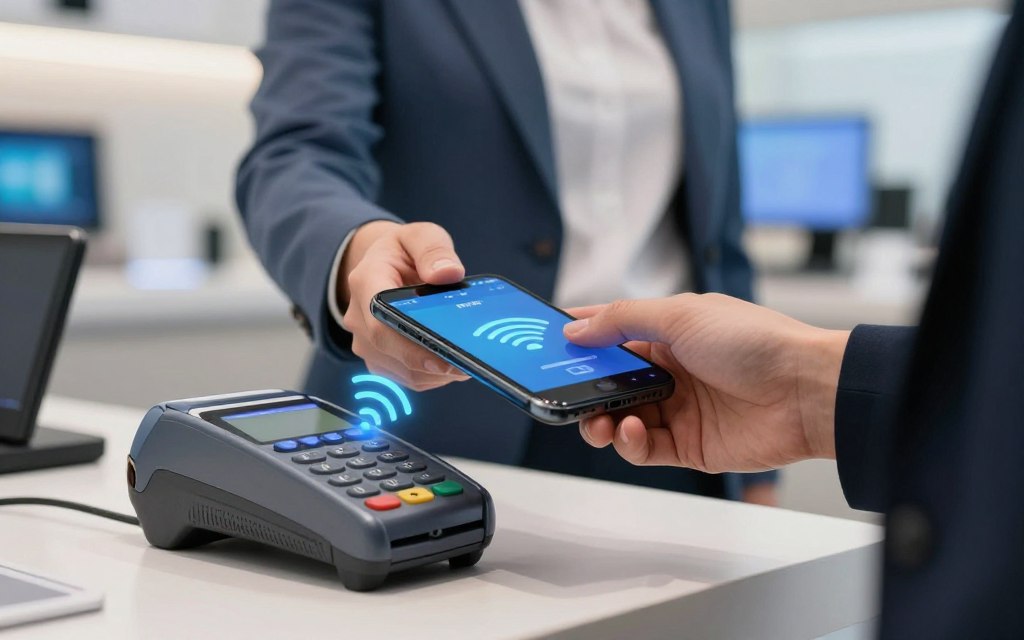
Near field communication (NFC) lets devices exchange small amounts of information within a few centimeters. This NFC technology supports contactless payments, mobile wallets, transit passes, and access systems. Tapping a phone or card completes transactions with ease, showing NFC’s value in daily life.
This article explores NFC’s origins and how NFC technology works. It explains the principles of electromagnetic and inductive coupling and how NFC operates in different modes. It covers NDEF data structure, compares NFC with RFID and Bluetooth, and examines security in tap-to-pay technology.
You will learn about major payment platforms in the U.S., everyday applications, and limits. NFC is designed for intentional proximity, enabling quick and secure interactions. Whether you tap your phone to pay for coffee or share data with a friend, NFC makes actions simple.
Key Takeaways
- NFC enables short-range wireless communication between devices.
- It is widely used in contactless payments and mobile wallets.
- The technology is designed for convenience and security.
- NFC operates using electromagnetic and inductive coupling.
- Understanding NFC can enhance your everyday tech interactions.
The Fundamentals of NFC Technology
Near Field Communication (NFC) is a short-range wireless system that lets compatible devices communicate. It uses radio-frequency communication at 13.56 MHz. NFC wireless communication exchanges data within a few centimeters, supporting secure transactions and quick interactions.
NFC supports mobile payments, access control, and data sharing. It can link a powered device, such as a smartphone, with another powered device or unpowered tag. The tag draws energy from the initiating device’s field and sends information, making NFC an essential part of modern contactless technology.
What Is Near Field Communication?
The near field communication definition describes protocols that let two electronic devices connect when brought close together. It has grown popular because it is easy to use and efficient. Users can tap NFC-enabled devices to start transactions or share information.
When you tap your smartphone at a checkout terminal, NFC helps complete the payment. This method is quick and improves security by reducing the risk of unauthorized access. NFC devices are common in smartphones, wearables, and other gadgets, making contactless technology available to many people.
Why NFC Matters in Modern American Daily Life
NFC is now part of daily life in the United States. It supports mobile wallet technology and public transit systems. People can easily board buses or trains by tapping smartphones or contactless cards.
NFC also makes event ticketing and access control more convenient. Many venues accept NFC-enabled badges, reducing the need for physical tickets. Its minimal setup and quick interactions improve user experience, offering a frictionless alternative to traditional methods of payment and access.
Related Posts:
- Science vs. Technology: What’s the Difference and…

- Front-End Technology Explained: The Tools Behind…

- IT Outsourcing Explained: Why Businesses Outsource…

- What Is a Use Case in Technology? A Simple Guide…

- What is Intel Smart Connect Technology Keeping Data Updated

- What is Network Switching Technology The Backbone of…
2. The Origins and Evolution of NFC Technology
NFC history begins with advances in radio-frequency identification (RFID) technology. RFID technology changed how we interact with the world by using radio waves to identify and communicate with tags. This foundation supported many uses, while NFC adapted it for closer-range communication.
NFC lets devices communicate within a few centimeters, supporting mobile payments and ticketing. Unlike broader RFID systems, NFC uses short-range communication to improve security and ease of use. This design meets the growing need for smooth, contactless interactions in daily life.
From RFID Roots to Modern NFC Standards
The move from RFID to NFC brought major advances in technology and standards. NFC adopted key RFID features and added capabilities for mobile devices. This change answered the need for efficient, secure communication in smartphones and other portable devices.
Modern NFC standards help devices and applications work together. Standardization helped NFC technology grow across industries such as retail and transportation.
The NFC Forum and Industry Standardization
The NFC Forum helps develop and promote NFC technology. Formed in 2004, it unites manufacturers, payment companies, and software providers to create shared specifications for NFC devices. Interoperability lets an NFC tag from one manufacturer work with other companies’ readers and mobile devices.
This teamwork supports the growth of NFC applications. Standardization creates consistent experiences in retail, access control, and smart packaging. With NFC standards and contactless communication standards, users can trust these technologies to work across platforms.
3. How NFC Technology Works: The Core Mechanism
Exploring NFC technology reveals the basic principles of short-range wireless communication. The NFC communication process connects two devices: an initiator and a target. The initiator, often an active NFC device like a smartphone or payment terminal, creates a radio-frequency NFC electromagnetic field through its antenna.
When another compatible device or passive NFC tag enters this field, it detects the signal and exchanges data. Standard modulation and communication rules help create smooth interactions. NFC’s short range supports fast exchanges between nearby devices.
The Physics Behind Short-Range Wireless Communication
NFC technology relies on the basic principles of electromagnetic fields. An active NFC device creates a field that sends radio waves to nearby passive tags. These tags have no power source, so they collect energy from the field and briefly operate.
They then send stored information back to the active device. For example, a checkout terminal creates the NFC electromagnetic field when you tap your smartphone against it. This shows how short-range wireless technology supports convenient transactions.
Active Versus Passive NFC Devices
Knowing the difference between active and passive NFC devices helps explain how NFC works. Active NFC devices have their own power source and can create an electromagnetic field. They can send and receive data independently, like smartphones, tablets, and payment terminals.
In contrast, passive NFC tags have no power source and contain an antenna and memory chip. They use energy from an active device’s field to work. Stickers, product labels, and business cards are common examples, though NFC interactions can use different power arrangements.
4. Inductive Coupling: The Heart of NFC Communication
At the core of NFC technology, inductive coupling supports smooth data transfer. An NFC antenna interacts with the electromagnetic field from another antenna. When two antennas are close and aligned, the field sends energy to a passive tag and transfers digital information.
NFC electromagnetic induction carries small data sets for quick transactions. The receiving component interprets changes in the electromagnetic field. NFC does not send large files or support long-distance connections; its strength is short-range operation.
NFC operates at a frequency of 13.56 MHz and typically works within a few centimeters. The NFC operating range varies with antenna size, device design, reader power, orientation, materials, and environmental conditions. Therefore, users often hold phones close to a specific spot on a terminal or tag to connect.
Metal surfaces, thick cases, and poor antenna alignment can make NFC communication less reliable. Other objects can also disrupt the electromagnetic field, so users should watch their surroundings when using NFC.
5. NFC Operating Modes Explained
These three NFC operating modes show how NFC improves daily tasks. Each mode helps NFC-enabled devices interact in a different way. Learning them helps users apply NFC technology effectively.
Reader/Writer Mode
In Reader/Writer Mode, an NFC-enabled device reads or writes an NFC tag. People use reader writer mode with smart posters and updated product labels. Tapping a smartphone on a poster may open a website or show event details.
This simple exchange gives quick information and improves consumer engagement.
Peer-to-Peer Mode
Peer-to-Peer Mode lets two active NFC devices exchange small amounts of information. NFC peer-to-peer can share contact details, send files, or start Bluetooth connections. Friends can tap phones to share a photo without complex setup.
Modern devices often use this mode differently than earlier NFC sharing features, making it easier.
Card Emulation Mode
In Card Emulation Mode, an NFC-enabled smartphone or wearable acts like a contactless card. Users can tap near a reader to make payments or enter transit systems. Card emulation mode supports mobile wallets, including Apple Pay or Google Pay.
Secure hardware, tokenization, and device authentication protect sensitive credentials during transactions.
| NFC Operating Mode | Functionality | Common Use Cases |
|---|---|---|
| Reader/Writer Mode | Reads from or writes to NFC tags | Smart posters, product updates |
| Peer-to-Peer Mode | Exchanges information between devices | File sharing, contact exchange |
| Card Emulation Mode | Acts as a contactless payment method | Mobile payments, transit access |
6. NFC Data Exchange Format and Message Structure
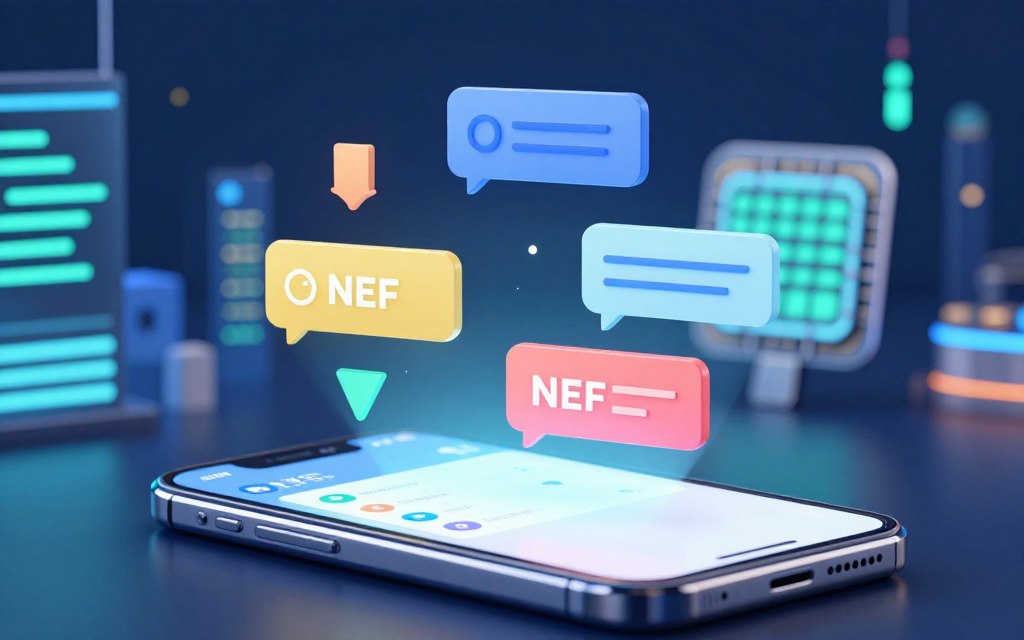
NDEF messages support everyday NFC technology applications. The NFC data format, called NDEF, gives NFC devices and tags a standard way to exchange information. Each NDEF message contains records identifying types such as web addresses, text, contact details, application data, or device-specific commands.
When a smartphone scans an NFC tag, it reads the NDEF record and offers an action. It might open a web browser at a specific URL or display a text message. NDEF messages support many applications and improve how people use NFC technology.
Understanding NDEF Messages
NDEF messages can hold multiple records in one message. Each record states its type and the data it contains. This flexible NFC data format supports many uses, such as storing multiple URLs or text types on one NFC tag.
Common NFC Tag Types and Their Capacities
NFC tag types differ in capacity, speed, memory structure, security features, and compatibility. The NFC Forum defines several common categories, summarized below.
| NFC Tag Type | Memory Capacity | Speed | Writable |
|---|---|---|---|
| NFC Forum Type 1 | Up to 96 bytes | 106 kbit/s | Yes |
| NFC Forum Type 2 | Up to 2 KB | 106 kbit/s | Yes |
| NFC Forum Type 3 | Up to 2 KB | 212 kbit/s | No |
| NFC Forum Type 4 | Up to 32 KB | 424 kbit/s | Yes |
Simple tags may store only a short URL or text string, while larger tags can hold records and application data. Some tags are read-only, while others are rewritable, so users can update their information.
Certain tags may support password protection, adding security. Choose the right NFC tag with enough NFC tag memory for its intended use. For rewritable uses, select a writable NFC tag to support optimal performance.
7. NFC vs. RFID vs. Bluetooth: Comparing Wireless Technologies
NFC, RFID, and Bluetooth each have different strengths. This wireless technology comparison explains their range, speed, power use, and common applications. These differences help users choose the best option.
Range, Speed, and Power Consumption
NFC (Near Field Communication) usually works within a few centimeters. Its short range supports secure transactions and intentional taps, especially contactless payments. RFID (Radio Frequency Identification) can work from centimeters to several meters, depending on the system.
Contactless RFID supports inventory tracking and access control. Bluetooth usually reaches beyond 10 meters, making it useful for continuous connections. This range suits audio streaming and peripheral connections.
However, Bluetooth pairing or device discovery can add complexity.
NFC transactions usually finish in less than a second, making quick payments efficient. RFID speed varies by system, while Bluetooth handles most tasks but may transfer small data more slowly. Passive NFC tags need no battery; they draw power from the reader, while active Bluetooth devices need a power source.
Use Cases and Practical Applications
NFC supports contactless payments and smart posters, where quick interactions matter. Contactless RFID supports inventory management, toll collection, and access control because it reaches farther and reads multiple tags at once.
Bluetooth pairing connects headphones, keyboards, and wearable accessories for smooth data transfer and audio playback. These technologies serve different purposes but can complement each other.
| Feature | NFC | RFID | Bluetooth |
|---|---|---|---|
| Range | Up to 10 cm | Up to 100 m | Up to 100 m |
| Speed | Fast (milliseconds) | Varies (milliseconds to seconds) | Moderate (seconds) |
| Power Consumption | Passive (no battery) | Active/Passive (depends on type) | Active (requires battery) |
| Common Use Cases | Payments, Smart Posters | Inventory Tracking, Access Control | Audio Devices, Peripherals |
Understanding the differences in NFC vs RFID and NFC vs Bluetooth helps users choose the right technology. For more information on NFC technology, visit this link.
8. How Tap-to-Pay Systems Use NFC Technology
NFC technology has changed how people use tap-to-pay systems. These systems offer a fast, secure way to pay with mobile devices or wearables. Understanding the process helps users get the most from NFC tap to pay and contactless payments.
The Transaction Process Step by Step
Here’s a breakdown of the typical NFC payment process:
- Device Authentication: The customer unlocks their mobile device or wearable. This step often includes biometric verification, such as a fingerprint or facial recognition.
- Selecting Payment Method: The user opens their mobile wallet and selects the payment card they wish to use.
- Proximity to Terminal: The customer holds their device near a compatible contactless terminal. This initiates the NFC communication.
- Data Transmission: The wallet presents a secure payment credential to the terminal. This data is transmitted via NFC technology.
- Authorization: The payment network and issuer authorize the transaction, ensuring the funds are available.
NFC technology connects the device and terminal. However, merchant software, payment processors, and fraud controls also support the payment process.
Tokenization and Secure Payment Authentication
Mobile payment security is a top priority. One key method is payment tokenization, which replaces the actual card number with a unique token. If intercepted, this token is less useful and adds another layer of security.
Additional security measures include:
- Dynamic Transaction Data: Each transaction generates unique data, making it harder for fraudsters to reuse information.
- Device Authentication: The device itself must be authenticated, ensuring that only authorized devices can initiate payments.
- Biometric or Passcode Verification: Users must verify their identity through biometrics or a passcode before completing a transaction.
- Secure Elements: Trusted execution environments protect sensitive data within the device.
- Issuer Monitoring: Continuous monitoring by the payment issuer helps detect and prevent fraudulent activities.
NFC technology makes payments more convenient, but security depends on the entire ecosystem. This ecosystem includes the device, wallet provider, payment network, and user behavior.
9. Major NFC Payment Platforms in the United States
NFC payment platforms have changed how people pay across the U.S. They offer convenience and security for everyday transactions. This section covers three major solutions available today.
Apple Pay and the iPhone NFC Chip
Apple Pay NFC payments use the iPhone NFC chip for security. Users can store credit and debit cards in Wallet, then hold their device near a contactless terminal. The iPhone creates a unique token for each purchase, while biometric authentication ensures only authorized users can pay.
Google Pay on Android Devices
Google Pay Android users can store eligible cards and pay with NFC at supported terminals. Users must enable screen lock or another authentication method for secure transactions. Availability may vary by device model, operating system, and card issuer.
Samsung Pay and MST Technology
Samsung Pay supports NFC payments and introduces Magnetic Secure Transmission (MST). MST lets compatible devices communicate with older terminals that accept only magnetic stripe cards. NFC is preferred at terminals; magnetic secure transmission offers flexibility at merchants, but support varies by location and device capabilities.
10. Beyond Payments: Everyday NFC Applications
NFC technology reaches beyond payment systems and supports many NFC applications in daily life. These tools improve public transit, access control, and marketing strategies. They simplify processes and make everyday experiences easier.
Public Transit and Access Control
NFC public transit systems now serve riders across the United States. Commuters can use smartphones, contactless cards, or wearable devices to present credentials to fare readers. This lets transit agencies manage fare rules, account balances, and backend authorizations efficiently.
Tapping a device to pay for rides makes public transportation more accessible and user-friendly.
NFC access control helps organizations secure workplaces and facilities. Organizations use NFC badges and mobile credentials for secure entry. Hotels use NFC keyless room entry, letting guests unlock doors with smartphones.
These systems verify permissions, so only authorized individuals gain access.
Smart Posters, Product Authentication, and Data Sharing
Smart posters with NFC tags link users to websites, event information, and promotions. This marketing tool engages customers and gives them instant access to useful content. Brands use NFC-enabled packaging and labels for NFC product authentication, warranty registration, and supply-chain visibility.
NFC product authentication depends on tag quality and the backend systems in place.
Moreover, NFC supports seamless data sharing. Digital business cards and contact exchanges become easy with a simple tap. This helps people network and make quick, efficient connections.
| Application | Description | Benefits |
|---|---|---|
| Public Transit | Use of NFC for fare payment | Convenience and efficiency |
| Access Control | NFC badges and mobile credentials | Enhanced security and user experience |
| Smart Posters | Links to digital content | Engagement and instant access |
| Product Authentication | Verification of product legitimacy | Consumer trust and safety |
| Data Sharing | Exchange of contact information | Networking made easy |
NFC technology supports much more than mobile payments. Its uses in public transit, access control, and marketing make daily tasks more efficient and user-friendly. For more on NFC’s impact across industries, read this informative article.
11. Security Considerations and Limitations of NFC
NFC security requires users to understand and address the technology’s limits. NFC’s short range lowers casual interception risks, but it cannot remove every threat. Understanding NFC vulnerabilities helps people use this technology safely.
Common NFC threats include:
- NFC skimming: Unauthorized devices can capture data from NFC tags.
- Relay attacks: Malicious actors can extend the communication distance between devices.
- Eavesdropping: Under specific conditions, sensitive information can be intercepted.
- Unauthorized tag replacement: Attackers may swap legitimate tags with malicious ones.
Insecure apps and compromised devices create additional risks. A passive NFC tag may safely open a public URL, but it should not handle sensitive credentials or unrestricted actions.
NFC interactions also raise NFC privacy concerns. They may reveal details about a user’s device, location, and activity. Depending on system design, attackers may exploit this information.
To improve NFC privacy and security, consider these measures:
- Keep devices updated to mitigate vulnerabilities.
- Use strong screen locks and enable biometric authentication.
- Review app permissions regularly.
- Avoid tapping unknown tags and verify URLs before accessing them.
- Quickly report lost devices or payment cards.
Secure NFC transactions depend on strong encryption, tokenization, and access controls. These practices help protect personal data and support a secure NFC experience.
| Security Threat | Description | Prevention Measures |
|---|---|---|
| NFC Skimming | Unauthorized data capture from NFC tags. | Use secure applications and keep devices updated. |
| Relay Attacks | Extending communication distance to intercept data. | Limit device proximity during transactions. |
| Eavesdropping | Intercepting data under specific conditions. | Use encryption for sensitive data. |
12. Conclusion
Our how NFC technology works summary explains NFC’s simple process. NFC technology leads contactless communication through a compatible device’s short-range electromagnetic field. This field lets nearby active or passive components exchange standardized data in reader/writer, peer-to-peer, or card emulation modes.
Inductive coupling supports this process at 13.56 MHz for efficient data transfer. NFC in everyday life shows the benefits of NFC through tap-to-pay systems using tokenization and device authentication. Apple Pay, Google Pay, and Samsung Pay show how NFC connectivity improves user experience.
Beyond payments, NFC supports public transit, access control, and smart posters, enriching daily interactions. As we consider the future of contactless technology, understanding NFC’s strengths, limits, and operation matters. It offers speed and convenience, but users must watch security and privacy; organizations should safeguard data with best practices.
By grasping how NFC technology works, individuals can value its role in modern life and make informed decisions.